For the complete documentation index, see llms.txt. Markdown variants of the ranked boards (dynasty and fantasy rankings for NFL, NBA, MLB and CFB) are available by appending .md to those URLs or by sending Accept: text/markdown; other pages answer 404.
DYNATYZE
This page's interactive half has not started on this device. Nothing was read, and nothing was invented in its place. Reload the page.
DYNATYZE
Loading
This page's interactive half has not started on this device. Nothing was read, and nothing was invented in its place. Reload the page.
James Conner Was Written Off. Is Chuba Hubbard Next?
NFL Analysis
James Conner Was Written Off. Is Chuba Hubbard Next?
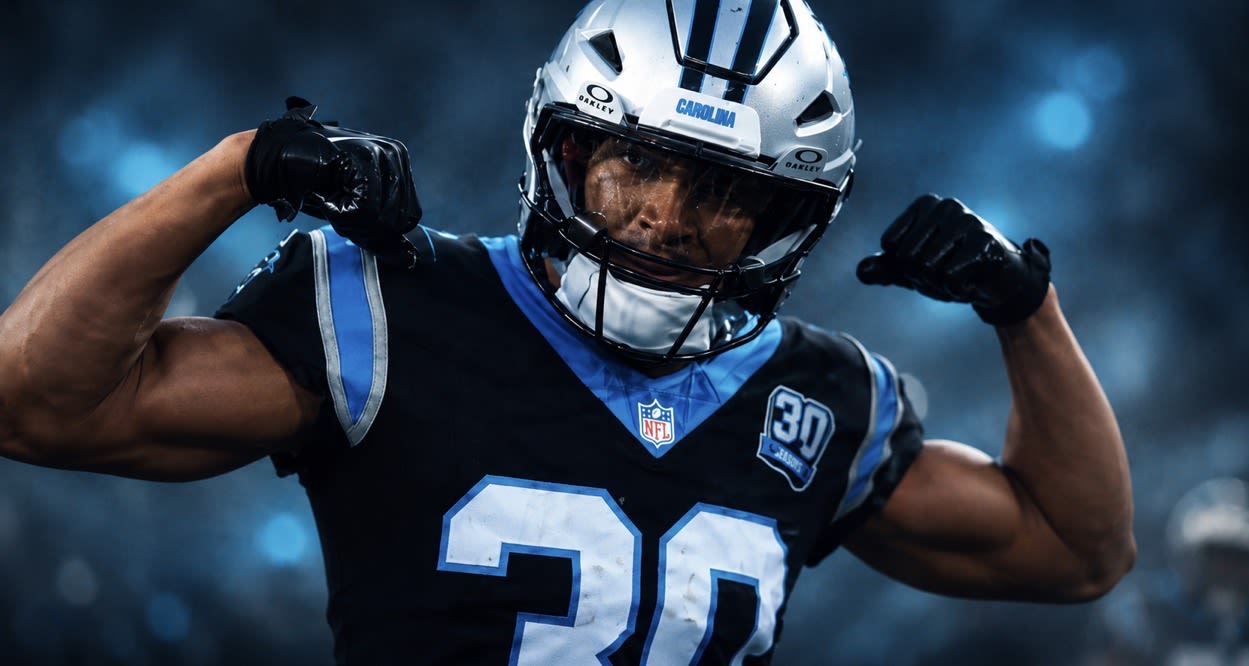
People once wrote off James Conner for a younger back. Chuba Hubbard may be the next proven veteran the market is discounting too quickly.
When Healthy, Chuba Hubbard Has Been Exactly Want We Want
The fantasy market looks ready to move on from Chuba Hubbard after one disappointing season.
Hubbard followed a career-best 2024 campaign with an injury-plagued 2025 in which his efficiency fell, his workload disappeared, and Rico Dowdle eventually took control of Carolina’s backfield. Now Jonathon Brooks is healthy, receiving first-team opportunities, and generating considerably more excitement heading into draft season.
The result is predictable. Hubbard has slipped into the mid-to-late RB3 range, with most drafters treating his 2024 breakout as the outlier and last season as the beginning of the end.
That feels like an overcorrection.
Hubbard may never repeat everything he accomplished two seasons ago. He also does not need another 250-carry season to outperform his current price. The player being drafted today has already shown he can handle a lead role, create yardage on his own, and turn high-value touches into fantasy production.
One injury-affected season should not erase all of it.
We Have Seen This Market Reaction Before
James Conner entered the 2024 season surrounded by many of the same concerns now following Hubbard.
Conner was 29 years old, had missed time throughout his career, and suddenly had a younger running back behind him whom Arizona had selected in the third round. Trey Benson was viewed as the more explosive option and the future of the Cardinals’ backfield. By the end of the summer, plenty of fantasy managers were drafting as though the transition had already started.
It had not.
Conner produced the best statistical season of his career, rushing 236 times for 1,094 yards and eight touchdowns while adding 47 receptions for another 414 yards. Benson mixed in, but he never displaced Conner as the lead back.
Hubbard is not Conner, and Brooks is not Benson. The situations are not identical.
The similarity is in how the market handles uncertainty. Fantasy managers become so focused on what the younger player could become that they stop giving the established starter credit for what he has already done. A possible backfield change gets priced as though it has already happened.
That is where Hubbard becomes interesting.
His 2024 Season Was Not Empty Volume
Hubbard’s 2024 breakout deserves more respect than it is receiving.
He carried the ball 250 times for 1,195 yards and 10 touchdowns, averaging 4.8 yards per attempt and nearly 80 rushing yards per game. Depending on the scoring format, he finished in the high-end RB2 to low-end RB1 range.
The workload was legitimate.
Hubbard accounted for roughly 61% of Carolina’s rushing attempts, played 69% of the offensive snaps, and handled approximately 64% of the team’s red-zone carries. He was not surviving on a few long runs or padding his production during a favorable stretch. Carolina consistently trusted him as its primary runner, including in the part of the field that matters most for fantasy scoring.
The efficiency backed it up.
According to Next Gen Stats, Hubbard generated 282 rushing yards over expected, the highest single-season total by a Panthers running back since at least 2018. He averaged approximately 3.5 yards after contact per attempt and earned a PFF rushing grade in the high 80s.
Those numbers help separate productive volume from replaceable volume.
Hubbard was not simply taking the carries Carolina gave him. He was adding yardage beyond what the blocking created, running effectively through contact, and producing in an offense that rarely forced defenses to respect the passing game.
Carolina saw enough to sign him to a four-year extension.
The Panthers did not make that commitment because they viewed him as a temporary solution who happened to stumble into one productive season. They paid a running back who had proven he could handle significant volume and play well with it.
So What Happened Last Year?
There is no point pretending Hubbard played well in 2025.
He finished with 134 carries for 511 yards, averaged 3.8 yards per attempt, and scored only one rushing touchdown. His explosive runs disappeared, he created less after contact, and Dowdle became the more effective option as the season progressed.
Those results matter. So does the calf injury Hubbard suffered early in the year.
He returned to the lineup but never looked like the same runner. The burst through the line was missing. He was less effective in traffic and easier to bring down on first contact. Eventually, Carolina leaned on the healthier back.
It would be convenient to blame every bad result on the injury. Hubbard may simply have played poorly, and his 2024 season could still prove to be the best year of his career.
But 2025 was not a clean evaluation.
Lower-body injuries can take away exactly what made Hubbard effective the previous season: acceleration, contact balance, and the ability to turn blocked gains into larger ones. When all three areas decline together, health has to be part of the discussion.
The market is treating last season as the only version of Hubbard that matters. That is the mistake.
Carolina’s Backfield Is More Open Than It Appears
Dowdle, the player who actually replaced Hubbard last season, is gone.
That leaves Hubbard competing primarily with Brooks and Trevor Etienne. Brooks is clearly the biggest threat. He was a second-round selection, has been involved with the first-team offense, and entered the league with the talent to become a featured back.
He should be taken seriously.
Brooks is also returning from a second ACL tear before establishing himself at the NFL level. That does not mean he cannot become Carolina’s starter. It means his health and workload should not be treated as settled questions in August.
There is a meaningful difference between taking first-team reps during the offseason and handling 15 to 20 touches per game across an entire NFL season.
Etienne gives Carolina another option, but he has not yet proven he can handle significant professional volume. The Panthers may use all three backs, particularly early in the season.
A committee would not eliminate Hubbard’s value.
He can lose a meaningful number of touches from his 2024 workload and still beat an RB3 price. A role built around early downs, short-yardage work, red-zone carries, and a handful of weekly targets would give him several paths to usable fantasy production.
The market appears to be drafting Brooks as the expected winner and Hubbard as the player left behind. The actual outcome may be far less decisive.
The Price Is Doing Most of the Work
Hubbard does not need to be treated as a priority target in every draft.
There are real risks. Brooks could stay healthy, look like the best back on the roster, and claim a larger role as the season moves along. Hubbard could fail to regain his 2024 efficiency. Carolina could rotate three players and leave everyone with an inconsistent weekly workload.
Those outcomes are already reflected in the price.
What is not being fully priced in is the possibility that Hubbard gets healthy and remains useful.
Most running backs available in this range require a projection. People are betting that a backup earns a larger role, a rookie adjusts immediately, or a committee back eventually takes over.
Hubbard has already done it.
He has handled 250 carries, rushed for nearly 1,200 yards, scored double-digit touchdowns, created yardage beyond what was blocked, and commanded the majority of Carolina’s red-zone rushing work.
The question is not whether lead-back production exists somewhere in his range of outcomes. We have already seen it. The real question is how much weight one injury-affected season should carry compared with the healthy season that came directly before it.
At his current cost, the answer matters.
The Takeaway
Jonathon Brooks is talented. He could eventually become Carolina’s starting running back.
That possibility should lower Hubbard’s price. It should not remove him from consideration.
Hubbard’s 2024 season was supported by strong rushing efficiency, consistent volume, valuable red-zone usage, and the ability to create after contact. His production fell apart the following year while he dealt with a calf injury and lost work to a veteran who is no longer on the roster.
Now he is healthy, the backfield has reopened, and the market is asking very little.
Hubbard probably will not see another 250 carries. He may not finish anywhere near the top 12 at the position. Neither outcome is necessary for him to become a profitable pick.
At an RB3 price, you are paying for the uncertainty surrounding his role while receiving very little credit for the possibility that the healthy version of Hubbard still exists.
For a player who has already delivered exactly what people are hoping to find in this range, that is a discount worth taking.